Background Characters Deserve Better: 5 Side Players With Stories We're Still Waiting For
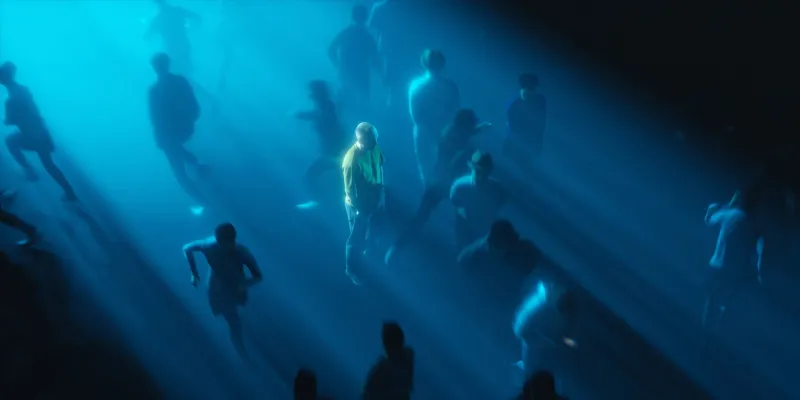
Every great story has them. Characters who flash across the screen or appear in a handful of chapters, carrying entire implied histories in a single line of dialogue or one carefully chosen costume detail. Characters who make you pause and think, wait, who is that person? — and then the camera moves on and you never find out.
Fan fiction has always been drawn to these figures. While the main cast gets all the narrative real estate, the side characters live in the margins — and the margins, it turns out, are where some of the most interesting stories are hiding. Here are five characters who deserved a bigger spotlight, along with the fan works that are finally giving it to them.
1. Neville Longbottom's Gran — Harry Potter
Augusta Longbottom appears in the books and films as a stern background presence: demanding, slightly terrifying, and obsessed with her son's old hat. Easy to read as comic relief. But think about what Augusta actually is: a woman who watched her son and daughter-in-law tortured into permanent incapacitation, who then raised their child alone while living with that grief every single day, who showed up at the Battle of Hogwarts at what appears to be an advanced age and took on Death Eaters.
That is not a background character. That is a protagonist who got edited out.
Fan fiction writers have been quietly building Augusta out for years. Stories exploring her marriage, her years raising Neville under the shadow of Frank and Alice's fate, and her complicated pride in a grandson she didn't always understand have become a small but devoted subgenre. Search AO3 for Augusta Longbottom and you'll find writers who treat her with the gravity she deserves.
2. Cassian's Backstory — Andor / Rogue One
The Andor series on Disney+ did something remarkable: it took a supporting character from Rogue One and built a prestige drama around him. But even within that show, there are figures who materialize briefly and then vanish — carrying entire implied histories.
Fan creators have latched onto the rebels Cassian moves through, the people who recruited him, the communities that shaped him. But perhaps more interesting are the fan theories and stories exploring the colonized world of Kenari itself — the planet where young Cassian lived before it was erased from Imperial records. The show gave us glimpses. Fan fiction has been doing the excavation work ever since, imagining what that culture looked like, what those children's lives contained before everything changed.
This is fan fiction operating as genuine cultural inquiry: asking what stories get suppressed, and why.
3. Diana Barrigan — White Collar
Diana Barrigan from White Collar was sharp, competent, and effortlessly cool in every scene she occupied. She was also consistently underused in a show that kept its focus tightly on Neal and Peter's dynamic. Diana's personal life, her relationship with Christie, her own history as an agent — these were sketched in broad strokes and then largely left alone.
The fan fiction community did not leave them alone. Diana-centric stories range from case fics where she leads the investigation to character studies exploring what it means to be the most competent person in every room and still not be the one the story is about. There's a whole conversation happening in these works about which characters TV shows decide matter — and Diana Barrigan keeps being the answer to the question the show forgot to ask.
4. The Hound's Brother — Game of Thrones / A Song of Ice and Fire
Sandor Clegane gets significant page and screen time. His brother Gregor is a recurring presence. But the story of how Gregor burned Sandor's face — the childhood event that defines the Hound's entire arc — exists only in fragments, told secondhand, never shown.
Fan fiction has returned to that moment obsessively, and for good reason. It's the kind of originating trauma that shapes everything downstream. Writers who engage with this territory aren't just filling in a gap; they're interrogating how violence reproduces itself, how children become the men they become, and what accountability looks like (or doesn't) in a world built on power.
Some of the most psychologically rigorous ASOIAF fan fiction lives in that space between what Martin told us and what he left out.
5. Entrapta's Origin — She-Ra and the Princesses of Power
She-Ra gave us Entrapta, an autistic-coded princess of technology who is simultaneously one of the show's most beloved characters and one of its most under-explained ones. Her backstory — why she was alone in her castle, what happened to her family, how she developed her particular relationship with machines over people — is gestured at but never fully explored.
Fan fiction in the She-Ra fandom has taken Entrapta's origin seriously in ways the show didn't quite have time for. Stories imagining her childhood, her relationship to her kingdom, and her complicated path toward genuine connection have become some of the most emotionally resonant works in the fandom. Writers have used her character to explore neurodivergent experience with a specificity and care that feels genuinely meaningful.
The Bigger Picture
What connects all these characters is that they exist at the edges of stories that made choices about whose interiority matters. Fan fiction makes different choices. It follows the character who walked off screen and asks: where did they go? What did they think about? What happened next?
That impulse — to insist that every person in the frame has a life worth examining — is one of the most quietly radical things fan culture does. The margins aren't empty. They're full of stories. And fan writers have been reading them for decades.